Magical Realism, Writing, Fiction, Politics, Haiku, Books


viernes, septiembre 16, 2011

Spare Troy Davis: The Forest And The Trees


On September 21, 2011, the State of Georgia plans to kill Troy Davis by lethal injection. If it happens, this execution will not be an unusual event. In Texas this year there have already been ten executions. In the United States this year there have been thirty-three executions. In fact, there have been some days in 2011 when there were two executions. But in general most, if not all of these killings have gone unnoticed. It’s as if someone had pressed the mute button, so we could not hear the anguish or see the tears, so we could not see what was being done in our names.

There were two executions planned in Texas this week. On September 13, 2011, Texas killed Steven Woods for 2001 a double murder. And on September 15, 2011, it took the US Supreme Court’s last minute stay to stop the planned killing of Duane Buck. Buck got some deserved attention because his death sentence included egregious “expert” testimony that Black people are more dangerous than whites. But in general, state killing goes on largely unnoticed. And without noticeable scrutiny. Or opposition.

Troy Davis is an exception to the silence and what appears to be acquiescence to state killing. Thank goodness. And that may be because Troy Davis is likely innocent. The case against him has disintegrated since his trial. It has fallen apart as witnesses recanted their testimony and explained the police coercion in interrogations that made them perjured themselves at his trial. Troy Davis appears to be innocent, a circumstances that Justice Scalia has opined in this very case is of no constitutional significance. Despite all of this Georgia relentlessly pursues killing him. So Troy Davis has managed to attract attention, which he completely deserves, and has elicited remarkable and justified eloquence in his defense. I wish others who have faced execution had received similar support, but I can understand completely why they have not. And I am pleased that the execution of Troy Davis has evoked such strong opposition.

I have twice before written about Georgia’s desire to kill Troy Davis, on July 7, 2006 and onAugust 9, 2009, and here I am again more than five years later saying the same thing, trying to ask you to ask the State of Georgia to spare the same man, Troy Davis. I won’t repeat all the reasons.

Troy Davis should be spared.

Alll I can do now is urge you, dear reader, to join the 663,000 people who have already signed a petition to go to spare Troy Davis by signing the NAACP petition and by taking the additional recommended steps to spare Troy Davis.

And also, please, whatever may happen to Troy Davis, please recognize that there are going to be more Troy Davises, recognized or not, as long as the United States has the death penalty. The only way to prevent that is abolition of state killing. Let’s spare Troy Davis. And let’s also stop state killing.

Etiquetas: ,

miércoles, agosto 19, 2009

State Killing: Scalia Doesn't Care Whether You're Innocent, You Get Executed Anyway

In the middle of Justice Scalia's dissent in Troy Davis's case, a dissent that Clarence Thomas joined in, we have this remarkable, astonishing, shocking sentence:

“This court has never held that the Constitution forbids the execution of a convicted defendant who has had a full and fair trial but is later able to convince a court that he is ‘actually’ innocent.”

I cannot believe that they wrote this in a Supeme Court opinion. And I'm not alone in thinking I would never, never, never see something like this in a published opinion.

Let's begin with the trial. The State of Georgia tried Troy Davis for murder and it got a conviction. And that conviction was upheld on appeal. In fact, there was nothing the matter with the trial, nothing wrong at all according to the appeals courts except one small thing. The jury convicted an innocent man.

Troy Davis was convicted of the capital murder of Mark MacPhail, an off-duty police officer who as then working as a security guard. You might think that convicting an innocent person was a serious problem with the trial. Unfortunately, Davis's persistent claims that he was innocent of the crime weren't enough to convince anyone. It was only later on, after the trial, after the appeals, that the ugly circumstances in the case emerged.

There were nine witnesses to the crime in which MacPhail was killed. Anthony Davis was apparently in a pool hall with a lot of other people. A man named Sylvester Coles was beating a homeless man outside; people including Davis emerged from the pool hall to see what was happening. MacPhail came to the aid of the person being beaten and was shot and killed. At trial Sylvester Coles was the prosecution's star witness. Seven other people said Anthony Davis committed the crime. The gun was never found. There was no physical evidence of any kind. That was the trial testimony, and it lead to a conviction and the death penalty. And to several affirmances on appeal.

And then, and then, and then, ut oh. Seven of the eight witnesses who claimed under oath and at trial to see Davis shoot MacPhail gave affidavits that their testimony at trial was false and they recanted their testimony. And some said that Coles was the actual killer and not Davis and that police coercion forced them to testify against Troy Davis instead of the real killer.

So Anthony Davis sits on death row. And he's facing execution. And the case goes to the Supreme Court. The majority, thank goodness, sent the case back to federal court for a hearing. Good. But Justices Scalia and Thomas dissented. And it's their dissent that makes me cringe.

Why? Evidently, in Scalia/Thomas World, if the state tries and convicts the wrong man, one who is actually innocent, and there's no Constitutional error committed in the trial according to the state courts, there's no constitutional problem with the state's killing him. Even if he's innocent. In other words, it's 100% legal, 100% ok to kill an innocent person. Law Professor Paul Campos explains:

Scalia takes the position that, from a legal perspective, it no longer makes the slightest difference whether Davis is innocent of the murder he was convicted of committing, and for which, in all likelihood, he will be executed. If a defendant got a fair trial in state court, there’s nothing the federal court can do, Scalia argues, to reverse that verdict—even if new evidence comes to light that convinces the court to a moral certainty that the defendant is innocent.

Scalia represents an extreme example of a certain kind of judge that positively revels in coming to conclusions that are morally revolting but “legally” sound. Judges of this type like these sorts of cases because they demonstrate that law is a supposedly nonpolitical and intellectually rigorous practice, rather than a touchy-feely exercise in doing what strikes the judge as the right thing.

What, after all, could be more nonpolitical and intellectually rigorous than executing an innocent man, simply because “the law” requires that result? In a perverse way, such bloody logic is a kind of advertisement for the supposed objectivity of the legal system, since we can assume that no sane decision maker would reach such a decision voluntarily. (The great legal historian Douglas Hay explained the 18th-century English practice of sometimes acquitting obviously guilty men on absurd procedural technicalities, such as incorrectly calling the defendant a “farmer” instead of a “yeoman,” in similar terms: “When the ruling class acquitted men on such technicalities they helped embody a belief in the disembodied justice of the law in the minds of all who watched. In short the law’s absurd formalism was part of its strength as ideology.”)

For more details on this case, and the recantations, see this.

I have written extensively about the barbarism that lies behind state killing. But I have never before seen anything quite like this statement from Justices Scalia and Thomas. It used to be a fundamental part of the law that it was better to let 99 guilty people go free than to convict 1 innocent person. In fact, the system of criminal justice in this Country was built on this very platform. But now, we have two Supreme Court justices writing that the death penalty can be upheld even when the person executed is innocent, that innocence just doesn't matter. Forget about the fact that if you're killing an innocent person, the person who actually did the crime hasn't been convicted.

That is chilling and simply disgraceful.

And it's another strong reason for ending state killing entirely. The machinery of death is an embarrassment to a civilized nation. Arguments like Scalia's and Thomas's reduce us to barbarians. And we're going to have evil, immoral arguments like these as long as there's a death penalty. That and we're going to continue to make it possible to kill innocent people.

Etiquetas: , , , , ,

miércoles, junio 03, 2009

Hypocrisy Watch: Excuses By Fundies, The Death of A Doctor

My wonderful phone company, Credo, sent me the following:
"Tiller the Baby Killer."

That's how FOX News host Bill O'Reilly referred to Dr. George Tiller who was murdered in cold blood Sunday while he attended church.

Tiller's crime? He provided healthcare to women. Including abortion.

Salon.com reports that FOX's "O'Reilly Factor" has featured attacks on Dr. Tiller on no less than 28 episodes:

"He's guilty of "Nazi stuff," said O'Reilly on June 8, 2005; "a moral equivalent to NAMBLA and al-Qaida," he suggested on March 15, 2006. "This is the kind of stuff happened in Mao's China, Hitler's Germany, Stalin's Soviet Union," said O'Reilly on Nov. 9, 2006.


What happened Sunday was devastating. And it might not have happened if it wasn't for the hate mongering of Bill O'Reilly and others.

There are two things you can do.
1. Sign our petition to Bill O'Reilly. Ask him to take responsibility for creating an atmosphere in which the assassination of Dr. George Tiller comes as no surprise. And tell him to stop spreading hateful rhetoric which encourages violence against doctors who provide reproductive healthcare for women.

2. Make a donation to Medical Students for Choice in honor of Dr. George Tiller. We must lift up a new generation of doctors who are willing and able to provide reproductive healthcare to women.


This Epistle to the Subscribers made sense to me. I signed petitions and I sent $$. I thought about it. It made sense, sort of: Billo spews garbage, crazy persons ingest garbage, garbage in garbage out, crazy person kills doctor who provides abortions. So it might go. But, alas, it didn't make that much sense, because if somebody believes that the life of a fetus is precious, how much more precious is the life of a doctor? Even a doctor who allegedly commits cardinal sins. Have we gone insane, I wondered.

Then I had the pleasure to re-read a short story by Jorge Luis Borges, "The Sect of the Thirty." The members of the sect are literal, they are deep fundamentalists. They read the Bible literally. Borges explains how they read this Biblical text, Luke 24-25:

Consider the ravens: for they neither sow nor reap; which neither have storehouse nor barn; and God feedeth them: how much more are ye better than the fowls? The text forbids saving, for If God so clothe the grass, which is today in the field and tomorrow is cast into the over; how much more will he clothe you, O ye of little faith? And seek now what ye shall eat, or what ye shall drink, neither be ye of doubtful mind


This leads to no saving, and throwing away one's clothing, and going naked, and not planting crops, and so on. Members of the Sect follow this full throttle, the consequences be damned.

And Jesus' admonition Let the dead bury the dead, Borges points out, "condemns the showy vanity of our funerary rites", but it also leads members of the Sect to the belief that dead bodies will actually be buried by spirits of the dead. Hence, no burials. No funerals. Rotting bodies. Vermin eating bodies. Stench. Putrifaction. Pestilence. And public health crises.

I have no intention of spoiling the story. That would be unfair to you. Suffice it to say that the members of the Sect of the Thirty would read the proscription in the Sixth Commandment (Exodus 20:13; Deuteronomy 5:17) literally, "Thou shalt not kill." They would not kill insects, or ants, or animals. Or people. They would not kill anything. There would be no exceptions for killing alleged "killers" either extra-judicially (like Dr. Tiller) or judicially (like Troy Davis). That distinction would be beyond their understanding. As it is beyond mine. Killing would be proscribed. Isn't that what the text says? "Thou shalt not kill" has no provisos, no exceptions, no quibbling, no excuses.

What then are we to make of the assassination of Dr. Tiller? Does it have anything at all to do with fundamental belief systems? Or hypocrisy? Or is it something else entirely? I suspect it is. I suspect it is a species of national, widespread, terrorist mental disease. What else, I ask, can it be? How can the thoughts exist simultaneously in a sane mind that "killing fetuses is wrong" and "those who kill fetuses are justifiably killed?" How can the "killers" of fetuses be condemned and the killers of doctors be called heroes? How can killing to end killing make sense, either as vigilantism (Dr. Tiller) or state killing (Troy Davis)? If killing is wrong, isn't killing always wrong? Will the person who killed Dr. Tiller answer these questions? Will his supporters? Will the news media? I doubt it. I suspect that applause for the killer will continue. And that the rest of us will continue to be stunned, shocked into silence.

I propose this to you for your consideration: There needs to be a new category in the DSM IV, that compendium of recognized mental illnesses, for this. I leave to you naming it. Our society has been breeding a specific kind of dangerous mental illness, and the assassination of Dr. Tiller proves it. Some members of our society have become unglued in their delusions, their religiosity, their violence, and the rest of us stand by in shock and horror as they play out their colossal hypocrisy.

Etiquetas: , , , ,

jueves, julio 05, 2007

Spare Troy Davis

crossposted at dailyKos

Sometimes a death penalty case comes along that is much more upsetting than the usual one. Of course, this depends on what upsets you. Personally, I think all executions are barbaric and they should be banned. And I find each one extremely upsetting. But even those who aren't absolutists like me find particular executions upsetting. Some executions, for example, of retarded people, of people under 18 at the time of their crime, upset even a majority of the Supreme Court so much that they prohibited such killings. But a majority of the Supreme Court isn't often upset by judicial killing and it often enables it. State killing continues, approved by the Supreme Court and the governments in more than 30 states.

Sometimes, a death penalty case comes along in which it looks for all the world like an innocent person is about to be executed. Sometimes the Supreme Court washes its hands of that case, turns its back, and diddles while somebody is fastened to the gurney.

Which brings me to Troy Anthony Davis and the efforts of Georgia to execute him on July 17, 2007, even though there are substantial doubts about his guilt of the crime.

Photo Sharing and Video Hosting at Photobucket
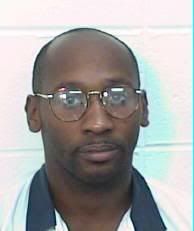
Troy Anthony Davis

Amnesty International provides the following brief synopsis (which I have edited; my comments are inserted in brackets)
On 28 August 1991 Troy Davis [who is an African American] was convicted of the
murder of 27-year-old Officer Mark Allen McPhail,
white, who was shot and killed in the parking lot of a
Burger King in Savannah, Georgia,
in the early hours of 19 August 1989. Troy Davis was
also convicted of assaulting Larry Young, a homeless
man, who was accosted and struck across the face with
a pistol immediately before Officer McPhail was shot.
At the trial, Troy Davis admitted that he had been at
the scene of the shooting, but claimed that he had
neither assaulted Larry Young nor shot Officer
McPhail.

There was no physical evidence against Troy Davis and
the weapon used in the crime was never found. The case
against him consisted entirely of witness testimony.
In affidavits signed over the years since the trial,
all but three of the state's non-police witnesses have
recanted their testimony. One of the three
non-recanting witnesses is a man who has not been
located for interview by Davis' appeal lawyers.
Another, while not recanting, has contradicted her
trial testimony. The third non-police witness who has
not recanted his testimony is Sylvester Coles, who was
the principle alternative suspect, according to the
defense at the trial, and against whom there is new
witness testimony implicating him as the gunman.

All of the others have recanted their testimony against Troy
Davis. In 1989, Kevin McQueen was detained in the same
jail as Davis. McQueen told the police that during
this time Troy Davis had confessed to shooting Officer
McPhail. [This is classic jailhouse snitch testimony
and it is notoriously unreliable.] In a 1996 affidavit,
McQueen retracted this
statement, saying that he had given it because he
wanted to "get even" with Davis following a
confrontation he said the two of them had had. Monty
Holmes testified against Troy Davis in a pre-trial
hearing, but did not testify at the trial because,
according to a 2001 affidavit, he did not want to
repeat his false testimony. Jeffrey Sapp testified
that Troy Davis had told him that he had shot the
officer. Recanting his testimony in a 2003 affidavit,
he stated that under "a lot of pressure" from police,
he had testified against Troy Davis. [These recantations
occurred years after the jury trial that led to Davis's
death penalty.]

At the trial, eyewitness Dorothy Ferrell identified
Troy Davis as the person who had shot Officer McPhail.
In a 2000 affidavit, she stated that she had not seen
who the gunman was, but testified against Davis out of
fear that if she did not, because she was on parole at
the time, she would be sent back to jail. In a 2002
affidavit, Darrell Collins, 16 years old at the time
of the crime, said that the day after the shooting, 15
or 20 police officers came to his house, and
"a lot of
them had their guns drawn". They took him in for
questioning, and "after a couple of hours of the
detectives yelling at me and threatening me, I finally
broke down and told them what they wanted to hear.
They would tell me things that they said had happened
and I would repeat whatever they said - I testified
against Troy at his trial - because I was still scared
that the police would throw me in jail for being an
accessory to murder if I told the truth about what
happened."


Larry Young, the homeless man who was accosted on the
night of the murder, implicated Troy Davis as the man
who had assaulted him. His affidavit, signed in 2002,
offers further evidence of a coercive police
investigation into the murder of their fellow officer:
"After I was assaulted that night - some police
officers grabbed me and threw me down on the hood of
the police car and handcuffed me. They treated me like
a criminal; like I was the one who killed the officer
- They made it clear that we weren't leaving until I
told them what they wanted to hear. They suggested
answers and I would give them what they wanted. They
put typed papers in my face and told me to sign them.
I did sign them without reading them."
In his 2002
affidavit he said that he "couldn't honestly remember
what anyone looked like or what different people were
wearing."

Antoine Williams, a Burger King employee, had just
driven into the restaurant's parking lot at the time the
shooting occurred. At the trial, he identified Troy
Davis as the person who had shot Officer McPhail. In
2002 he stated that this was false, and that he had
signed a statement for the police which he could not
and did not read:
"Even today, I know that I could not
honestly identify with any certainty who shot the
officer that night. I couldn't then either. After the
officers talked to me, they gave me a statement and
told me to sign it. I signed it. I did not read it
because I cannot read. At Troy Davis's trial, I
identified him as the person who shot the officer.
Even when I said that, I was totally unsure whether he
was the person who shot the officer. I felt pressured
to point at him because he was the one who was sitting
in the courtroom. I have no idea what the person who
shot the officer looks like."


Due to the procedural obstacles facing a death row
inmate seeking a hearing on post-conviction evidence,
Troy Davis has had no such hearing on the current
state of the witness testimony.
At oral arguments in
front of a three-judge panel of the federal 11th
Circuit Court of Appeals in September 2005, one of the
judges expressed concern that Troy Davis had not been
granted a federal hearing to present the
post-conviction evidence. She asked, "If these people
say, "I was coerced by the police - how could [the
lower federal judge] reject that without a hearing?"
She reportedly suggested that without the testimony of
the various trial witnesses who had now recanted, the
state appeared to have no case. However, in September
2006, the 11th Circuit Court upheld the federal
judge's ruling, and on 25 June 2007 the US Supreme
court refused to intervene
. For a full report on this
case, see USA: "Where is the justice for me?"


I'm not at all convinced that Troy Anthony Davis committed the murder for which Georgia plans to execute him on July 17, 2007. And I'm not alone in this. See this NY Daily News column, this from the Hill, and statements from others who have examined the case. Bishop Desmond Tutu and Sr. Helen Prejean agree. Given the state of the record, I doubt rational humans could argue that they are at all convinced-- forget about being convinced beyond a reasonable doubt-- that Troy Anthony Davis is guilty. No matter, according to the Hill
Georgia officials, however, consistently have said courts have looked at Davis’s arguments, and the state’s attorney general’s office has indicated it is comfortable with the decision to carry out the death sentence.


What is to be done? Time is extremely short. Amnesty suggests the following:
Please send appeals to arrive as
quickly as possible, in your own words:

- explaining that you are not seeking to condone the
murder of Officer Mark Allen McPhail, or to downplay
the seriousness of the crime or the suffering caused;

- noting that many of the witnesses who testimony was
used against Troy Davis at his trial have since
recanted their trial testimony, and that there is new
evidence against an alternative suspect in the case;

- noting the large number of wrongful convictions in
capital cases in the USA since 1976, and noting that
unreliability of witness testimony has been a
contributing factor in many of these cases;

- noting that the power of clemency in capital cases
exists as a failsafe against irreversible error that
the courts have been unable or unwilling to remedy;

- calling on the Board to commute the death sentence
of Troy Davis.

APPEALS TO:

State Board of Pardons and Paroles
2 Martin Luther King, Jr. Drive, SE, Suite 458
Balcony Level, East Tower
Atlanta, Georgia 30334-4909
Fax: 1 404 651 8502
Email: webmaster@pap.state.ga.us
Salutation: Dear Board members

PLEASE SEND APPEALS IMMEDIATELY


It is extremely important that each of us make it clear that this execution is not being carried out in our names. Please take a moment to email or write the George Board of Pardons and Paroles.

Etiquetas: , , ,