Magical Realism, Writing, Fiction, Politics, Haiku, Books


jueves, agosto 18, 2011

Insults


According to Flavorwire, here are the thirty harshest author-on-author insults in history. Truth is they are incredibly clever. But I cannot believe that this is all. I'm sure there are others that are even more devastating. Even more witty.

An quick example from the list:

15. William Faulkner on Ernest Hemingway

“He has never been known to use a word that might send a reader to the dictionary.”

14. Ernest Hemingway on William Faulkner

“Poor Faulkner. Does he really think big emotions come from big words?”

Enjoy. At least they're not saying those things about you. Or, on the other hand, maybe it's too bad that they're not.

Etiquetas: ,

jueves, junio 21, 2007

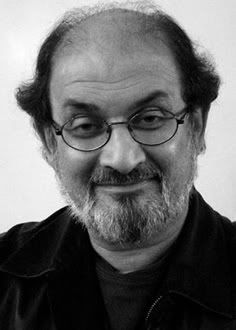
Sir Salman Rushdie and Extreme Forms of Criticism

Photo Sharing and Video Hosting at Photobucket

cross postsed at dailyKos

This is Sir Salman Rushdie. I've been thinking about him a lot today.

You'll recall that after he published his novel, Satanic Verses, Ayatollah Khomeni issued a fatwa condemning him to death. It seems that Satanic Verses appropriated the prophet Muhammad as a character and attributed what some thought were insulting things to him. Later, the writer VS Naipaul, one of my heroes, described the fatwah as "an extreme form of literary criticism."

It may be difficult to tell what will insult readers and even make them throw rocks. As Rushdie himself wrote in The Ground Beneath Her Feet,
"Insults are mysteries. What seems to the bystander to be the cruelest, most destructive sledgehammer of an assault, whore! slut! tart!, can leave its target undamaged, while an apparently lesser gibe, thank god you're not my child, can fatally penetrate the finest suits of armour, you're nothing to me, you're less than the dirt on the soles of my shoes, and strike directly at the heart."


Which brings me ever so cautiously to the literary and rock throwing news. This February 6, 2006, New York Times' story is as frightening as it is hard to fathom:
Demonstrations against the publication of cartoons of the Prophet Muhammad by newspapers in Europe spread across Asia and the Middle East today, turning violent in Afghanistan, where at least four protesters were killed and over a dozen police officers and protesters injured.

The protests gained momentum all over the Muslim world, a day after attacks on the Danish consulate in Lebanon and the Danish and Norwegian Embassies in Damascus, Syria, on Saturday. Muslim clerics led demonstrations in half a dozen cities in Afghanistan, and protesters turned out in Indonesia, India, Thailand, Iran, and even in New Zealand, where local newspapers recently reprinted the offending cartoons.

A teenager died in Somalia in East Africa today when police fired in the air to disperse stone-throwing protesters and set off a stampede. A crowd of about 200 people stoned and broke the windows of the Austrian Embassy in the Iranian capital, Teheran, and tried to hurl gasoline bombs inside, Reuters reported. Police with riot shields prevented further damage and the crowd dissipated after an hour, the agency reported.


And the threats of death as the result of Rushdie's Saturday knighthood. Take, as a small example, this literary criticism by Pakistan's religious affairs minister, quoted in the New York Times:
The religious affairs minister, Mohammed Ijaz ul-Haq, said in Parliament, “If someone exploded a bomb on his body, he would be right to do so unless the British government apologizes and withdraws the ‘sir’ title.”


Alas, I have worried that not enough people would read my 2005 book, The Dream Antilles. After all, Amazon has it ranked in the 400,000's today. But that seeming problem, a mix of ego, marketing and personal finance, pales compared with the idea that a few people would read my book and then thousands and thousands around the world would run into the streets trying to maim and kill people because of the affronts they perceived in it. Or that they would react in this way to some cartoons. Or the conferral of a knighthood on an author whose best work in my view was Midnight's Children, a remarkable magical realism novel paralleling the birth of India as a nation which won the 1981 Booker Prize and was later awarded the 'Booker of Bookers' Prize in 1993 as the best novel to be awarded the Booker Prize in its first 25 years. People here who know or have heard of only Satanic Verses should treat themselves to Midnight's Children. I just don't get it.

I will admit that I did smile when Mario Vargas Llosa had crowds attack the radio station in Aunt Julia and the Scriptwriter because of insults to Argentinians. I thought that was a riot, and I laughed aloud. But I am not laughing at today's news of reaction to Salman Rushdie's knighthood.

I guess I didn't realize that writing could be so dangerous. Or that criticism could be so extreme.

Etiquetas: , , ,

domingo, mayo 06, 2007

Everybody's A Critic. Not.


HL Mencken

The Sage of Baltimore, H.L. Mencken (1880-1956), knew something about criticism. A brief excerpt from "On Being an American" illustrates this nicely:
Here the business of getting a living ... is enormously easier than it is in any other Christian land—so easy, in fact, that an educated and forehanded man who fails at it must actually make deliberate efforts to that end. Here the general average of intelligence, of knowledge, of competence, of integrity, of self-respect, of honor is so low that any man who knows his trade, does not fear ghosts, has read fifty good books, and practices the common decencies stands out as brilliantly as a wart on a bald head, and is thrown willy-nilly into a meager and exclusive aristocracy. And here, more than anywhere else I know of or have heard of, the daily panorama of human existence, of private and communal folly—the unending procession of governmental extortions and chicaneries, of commercial brigandages and throat-slittings, of theological buffooneries, of aesthetic ribaldries, of legal swindles and harlotries, of miscellaneous rogueries, villainies, imbecilities, grotesqueries and extravagances—is so inordinately gross and preposterous, so perfectly brought up to the highest conceivable amperage, so steadily enriched with an almost fabulous daring and originality, that only the man who was born with a petrified diaphragm can fail to laugh himself to sleep every night, and to awake every morning with all the eager, unflagging expectation of a Sunday-school superintendent touring the Paris peep-shows.


Wow. Now that is what happens when one writes with a sharpened skewer. Mencken is entertained, and so am I. I love his lists. Also, the Sunday-school superintendent crack is just wonderful. Oh how I wish my daily Internet reading had anything written so brilliantly. And forget about that stack of grey newspapers. But I digress.

The May 2 New York Times ran an article Are Book Reviewers Out of Print?" The Atlanta Constitution, it seems, eliminated the job of its book editor, and the Times bemoans this as part of an extremely dangerous trend. The danger is probably limited to soon to be former book editors, and doesn't seem to reach readers or writers or bloggers:
The decision in Atlanta — in which book reviews will now be overseen by one editor responsible for virtually all arts coverage — comes after a string of changes at book reviews across the country. The Los Angeles Times recently merged its once stand-alone book review into a new section combining the review with the paper’s Sunday opinion pages, effectively cutting the number of pages devoted to books to 10 from 12. Last year The San Francisco Chronicle’s book review went from six pages to four. All across the country, newspapers are cutting book sections or running more reprints of reviews from wire services or larger papers.

To some authors and critics, these moves amount to yet one more nail in the coffin of literary culture. But some publishers and literary bloggers — not surprisingly — see it as an inevitable transition toward a new, more democratic literary landscape where anyone can comment on books.


Another "nail in the coffin of literary culture?" Talk about self importance. The Times article does however come off its high horse to notice various literary blogs (not this one), most of which you can find to the right of this posting, which provide the "new, more democratic literary landscape where anyone can comment on books." Well, thanks, I guess. The fact is that the lit blogs are much more plentiful and much more fun than newspaper book reviews.

The lit blogs are consistently a much better crafted, more interesting read than the daily newspapers, too. Part of that may be the lack of profit motive. Part of that may be that these are labors of love. And part of that might be blog tone. I don't have that "audience confusion" I see so regularly in the papers, nor am I trying to impress you or anybody with my literary erudition.

For erudition, well, you can just click on the right and follow the yellow brick road. And if you want to find out about books you'll like, whether or not they are now in print, and hear intelligent discussion about books, the blogs are providing a daily 12 course repast. Enjoy!

Etiquetas: , , ,